Fibre and Down’s Syndrome: Small Food Changes That Can Make a Big Difference
Constipation can be uncomfortable, painful and exhausting. For people with Down’s syndrome, it can also be easy to miss. A person may not always be able to explain that their tummy hurts, that going to the toilet is difficult, or that they feel bloated and unwell.
That is why fibre matters.
Fibre is the part of plant foods that helps keep our bowels working well. It is found in foods such as oats, fruit, vegetables, beans, lentils, peas, brown rice, potatoes with skins, seeds and wholegrains. For many people, eating enough fibre, drinking enough fluid and moving regularly can help prevent constipation and support better gut health. [1]
For adults with Down’s syndrome, fibre needs to be introduced thoughtfully. The aim is not to suddenly “add loads of roughage”. The aim is to support the person’s body in a safe, gradual and person-centred way.
This article explains why fibre is important, what to watch out for, and how families, carers and Has2Bhappy staff can support healthy choices in everyday life.
Why constipation is more common in Down’s syndrome
People with Down’s syndrome often have low muscle tone, also called hypotonia. This can affect posture, movement and, for some people, the muscles involved in passing stool. Lower muscle tone can make it harder for the bowel to move poo along comfortably. [2]
Constipation is also more common in people with learning disabilities, and it can sometimes be overlooked. Changes in behaviour, mood, sleep, appetite or engagement may be signs that something physical is wrong. We should never assume that distress or “challenging behaviour” is simply part of someone’s disability. Pain has behaviour. [3]
Other things can also increase the risk of constipation, including:
not eating enough fibre
not drinking enough fluid
not moving enough
ignoring the urge to go to the toilet
some medicines
thyroid problems
coeliac disease
changes in routine, anxiety or stress [1]
For people with Down’s syndrome, good bowel care is not a small issue. It is part of dignity, comfort, health and quality of life.
What fibre does
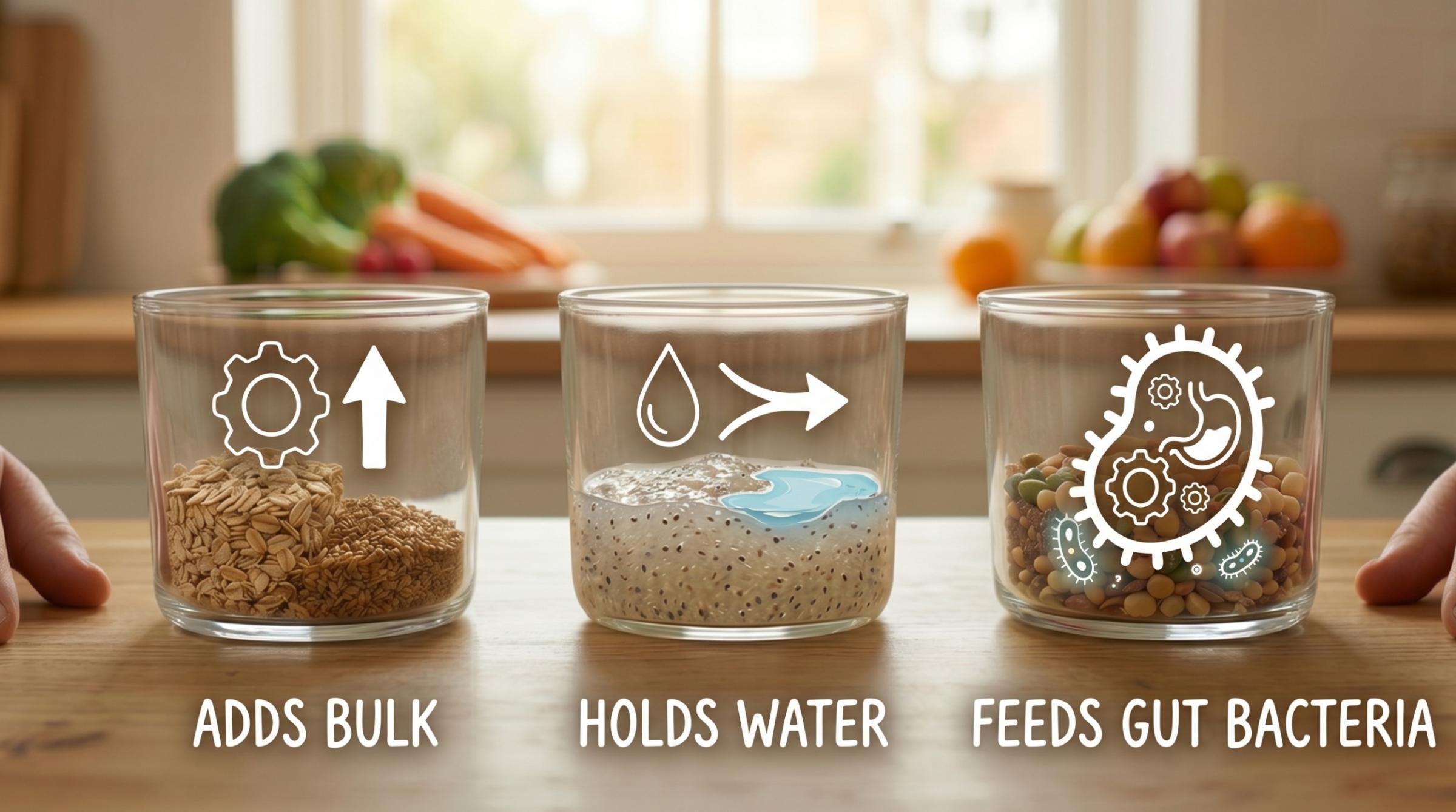
Fibre helps the bowel in different ways. Some fibre adds bulk to poo. Some fibre helps hold water in the stool, making it softer and easier to pass. Many high-fibre foods also support the healthy bacteria in our gut. [4]
A helpful way to explain fibre is:
“Fibre helps your poo stay soft and move along.”
For some people, especially those with slower bowel movement, softer fibre choices may be easier to tolerate at first. Good options can include:
porridge or overnight oats
stewed apple or pear
banana
cooked carrots, parsnips, squash or sweet potato
lentil soup
smooth hummus
baked beans
well-cooked peas or lentils
blended vegetable soups
smoothies made safely to the person’s eating and drinking plan
It is usually best to increase fibre gradually. Adding too much too quickly can cause wind, bloating or discomfort. Fibre also needs fluid to work well, so drinks matter too. [4]
Start low, go slow
When someone is constipated, it can be tempting to make big diet changes all at once. Usually, a gentler approach is better.
Try one small change at a time, such as:
adding a spoonful of stewed fruit to breakfast
swapping white toast for a higher-fibre option if safe and suitable
adding lentils to soup
offering a small portion of baked beans with lunch
choosing porridge instead of low-fibre cereal
adding soft cooked vegetables to a favourite meal
Give the person time to adjust. Watch for changes in comfort, bloating, stool pattern and appetite. If symptoms get worse, pause and ask for advice from the GP, pharmacist, dietitian or learning disability nurse.
Fibre and fluids: they work as a team
Fibre without enough fluid can make constipation worse. This is because fibre absorbs water. If there is not enough fluid, stools may become harder and more difficult to pass.
Support can include:
offering drinks regularly through the day
using the person’s preferred cup or bottle
building drinks into routines
offering water, milk, squash, herbal tea or other suitable drinks
using visual prompts, such as a drinks chart
encouraging fruit and vegetables with a high water content, if safe
Some people do not recognise thirst. Others may avoid drinking because they worry about needing the toilet. Support should be kind, respectful and practical.
Swallowing safety comes first
Some adults with Down’s syndrome have chewing or swallowing difficulties. This is known as dysphagia. If a person has a swallowing care plan, speech and language therapy recommendations, or an IDDSI food texture level, this must always be followed. [5]
High-fibre foods can be risky if they are dry, hard, stringy, crumbly or difficult to chew. Examples might include whole nuts, seeds, raw carrot, celery, dry crackers, tough fruit skins or mixed-texture foods.
Safer high-fibre choices may include:
smooth fruit purée
mashed banana
smooth hummus
well-blended lentil soup
mashed sweet potato
soft cooked vegetables
porridge made to the right texture
thick smoothies, if suitable for the person’s drinking plan
The key question is not just “Is this food healthy?” It is also “Is this food safe for this person?”
Coeliac disease and gluten-free fibre
Coeliac disease is more common in people with Down’s syndrome. Coeliac disease is an autoimmune condition where eating gluten damages the gut. Gluten is found in wheat, barley and rye. [6]
This matters because many common high-fibre foods contain gluten, including wholemeal bread, wheat-based cereals and regular pasta. These are not suitable for someone with diagnosed coeliac disease.
Gluten-free fibre options may include:
gluten-free oats
brown rice
quinoa
potatoes with skins, if safe to eat
beans
lentils
chickpeas
fruit
vegetables
nuts or seeds only if safe and appropriate for swallowing
Anyone with suspected coeliac disease should not start a gluten-free diet before medical testing unless advised by a doctor. Removing gluten too early can affect test results.
Signs that should prompt a conversation with the GP include ongoing constipation or diarrhoea, tummy pain, bloating, tiredness, unexplained weight loss, vomiting, anaemia, or a change in behaviour.
Make fibre visual, practical and meaningful
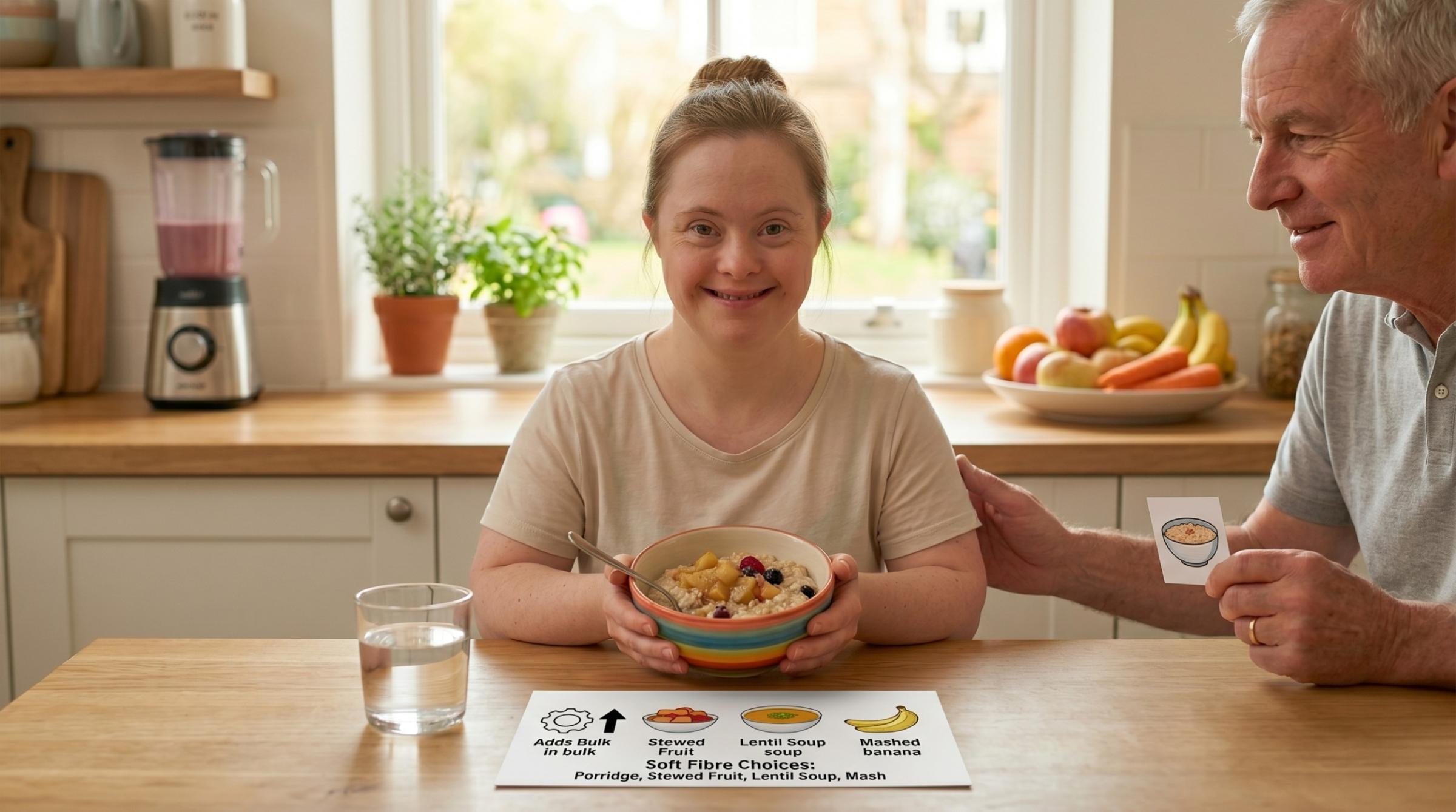
Telling someone “you need more fibre” may not mean much. It can sound abstract. Many people learn better when information is visual, repeated and linked to real life.
Helpful ideas include:
Use pictures
Create a simple “foods that help my tummy” board with photos of the person’s own favourite fibre foods.
Offer choices
Instead of asking, “Do you want fibre?” try:
“Would you like porridge or Weetabix?”
“Would you like beans or lentil soup?”
“Would you like banana or stewed apple?”
Cook together
Making soup, mashing banana, stirring porridge or choosing fruit at the shop can help the person understand food in a hands-on way.
Use simple language
Try phrases like:
“This helps your tummy.”
“This helps your poo stay soft.”
“Drinks help fibre work.”
“Small changes are good.”
Keep routines predictable
Bowels like routine. Regular meals, regular drinks, movement and unhurried toilet time can all help.
What Has2Bhappy staff can do
Good bowel support is everyone’s business. Staff can help by noticing patterns, recording clearly and supporting healthy routines without nagging or taking over.
Practical support includes:
recording bowel movements accurately
noticing changes in mood, appetite, sleep or behaviour
encouraging drinks throughout the day
supporting movement and activity
offering high-fibre foods the person enjoys
following any eating, drinking or swallowing plans
checking whether the person has pain, bloating or discomfort
supporting privacy and dignity in the bathroom
sharing concerns with families, managers, nurses or the GP
If a person has a learning disability, they should be offered an annual health check from age 14. This is a useful opportunity to discuss constipation, diet, medicines, thyroid health, coeliac symptoms and any changes in wellbeing. [7]
When to ask for medical help
Ask the GP, pharmacist, NHS 111 or another health professional for advice if constipation is new, ongoing, painful or not improving.
Seek urgent medical help if the person has:
severe tummy pain
a swollen or hard tummy
vomiting
blood in their poo
black poo
unexplained weight loss
fever
signs of dehydration
repeated overflow diarrhoea
no bowel movement for several days and they seem unwell
a sudden change in behaviour that may suggest pain
Constipation can become serious if it is not treated. It is always better to ask early than to wait.
Small changes, big comfort
Fibre is not about perfect diets. It is about helping someone feel comfortable, well and able to enjoy life.
For adults with Down’s syndrome, the best approach is:
person-centred
gradual
visual
safe for swallowing
adapted for coeliac disease if needed
supported by fluids and movement
monitored carefully
discussed with health professionals when needed
A bowl of porridge, a favourite lentil soup, a drink offered at the right time, a calm toilet routine, a carer noticing discomfort early — these small things can make a big difference.
Supporting gut health is supporting dignity, comfort and happiness. And that is very Has2Bhappy.
Citation key
[1] NHS guidance lists low fibre intake, low fluid intake and low activity among common causes of constipation, and NHS fibre guidance says UK adult fibre intake should increase to 30g a day as part of a healthy balanced diet.
[2] The Down’s Syndrome Association describes hypotonia as one of the common musculoskeletal challenges in people with Down’s syndrome, and Mass General’s Down syndrome constipation guidance states that lower muscle tone can make it harder to pass stool.
[3] GOV.UK guidance says people with Down syndrome or cerebral palsy have increased risk of constipation, and warns that symptoms can be overlooked or misattributed to a person’s learning disability. NHS England also notes that people with learning disabilities may be less able to recognise or communicate constipation symptoms.
[4] BDA and NHS-linked dietetic guidance describe fibre as coming from plant foods and helping constipation by absorbing water and making stool easier to pass; NHS Fife guidance notes soluble fibre can form a gel with water and that fibre should be increased gradually.
[5] GOV.UK provides reasonable-adjustment guidance for dysphagia in people with learning disabilities, and IDDSI provides standardised texture-modified food and drink resources for people with chewing or swallowing problems.
[6] NHS states that people with Down’s syndrome have an increased risk of coeliac disease. DSMIG says coeliac disease is more common in people with Down syndrome and is managed by excluding gluten from the diet; Coeliac UK notes that gluten-free diets can be low in fibre and wholegrains.
[7] NICE says annual health checks for people with a learning disability help identify health issues early and keep the person’s health action plan up to date. The Down’s Syndrome Association says anyone with Down’s syndrome aged 14+ can have a free annual health check.